Contents
- 1 Key Takeaways
- 2 Table of Contents
- 3 Defining Kaiseki: Japan’s Ultimate Culinary Art Form
- 4 The Anatomy of a Kaiseki Meal: A Sequence of Seasonal Wonders
- 5 Kyoto vs. Osaka: Why Kansai is the Global Heart of Kaiseki
- 6 Mastering Kaiseki Etiquette: How to Dine Like a Local Pro
- 7 Experience the Best of Kansai Cuisine with Best Adventure Kansai
- 8 Your Unforgettable Kansai Culinary Adventure Awaits
- 9 Frequently Asked Questions
- 9.1 Is Kaiseki worth the high price?
- 9.2 What should I wear to a Kaiseki dinner?
- 9.3 How long does a full Kaiseki meal usually take?
- 9.4 Can children enjoy a Kaiseki experience?
- 9.5 Do I need to make a reservation for Kaiseki in Kyoto or Osaka?
- 9.6 Is it okay to take photos of the food during the meal?
- 9.7 What is the average cost of a Kaiseki dinner in Japan?
- 9.8 Can Kaiseki be made gluten-free or vegan?
What if the most breathtaking meal of your life was actually a silent, delicious conversation between a master chef and the changing seasons? You’ve likely seen those stunning photos of multi-course masterpieces and asked yourself, “what is kaiseki, and is it really worth the splurge?” It’s totally normal to feel a splash of menu anxiety when you’re looking at a 12 course feast that can cost upwards of 30,000 yen at a top-tier Kyoto establishment. You want to experience the best of Japan, but you don’t want to accidentally break a centuries-old etiquette rule while you’re at it!
We’re here to turn that uncertainty into pure, high-energy excitement by revealing the secrets of this 500-year-old culinary tradition. You’ll discover the deep history, the hidden seasonal meanings, and why the Kansai region is the undisputed heart of this edible art form. We’ll show you exactly how to navigate a high-end Ryokan meal with total confidence. From the delicate, refined dashi of Kyoto to the vibrant, bold flavors of Osaka, this guide ensures you’ll know exactly what to expect. Get ready to dive into an unforgettable adventure that tastes as good as it looks!
Key Takeaways
- Discover the humble Zen Buddhist origins of this art form and finally understand exactly what is kaiseki in the world of elite Japanese haute cuisine!
- Learn to read the visual storytelling of a seasonal menu where every handcrafted plate and temperature change creates a breathtaking culinary masterpiece.
- Explore the thrilling contrast between Kyoto’s refined imperial traditions and Osaka’s intimate, over-the-counter style to find your perfect flavor adventure.
- Master the essential etiquette and chopstick secrets needed to navigate a traditional setting with the grace and respect of a true local expert!
- Find out how a private guide can unlock authentic hidden gems and turn your next meal into an unforgettable journey through the heart of Kansai.
Defining Kaiseki: Japan’s Ultimate Culinary Art Form
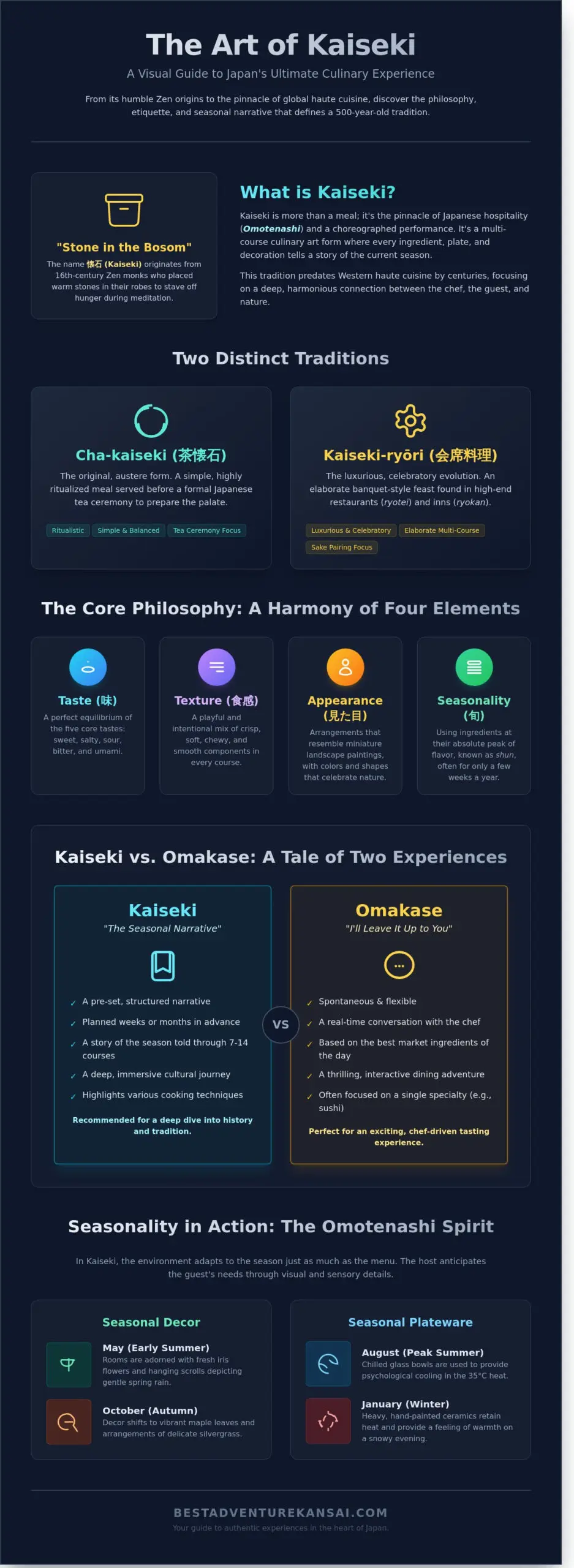
Get ready to embark on a sensory journey that defines the very soul of Kyoto. If you are wondering what is kaiseki, think of it as the ultimate expression of Japanese hospitality and the pinnacle of global fine dining. While the West has its Michelin-starred “Haute Cuisine,” Japan offers a tradition that predates modern restaurant culture by centuries. This isn’t just a meal; it’s a choreographed performance where every ingredient tells a story of the land and the season.
The term itself carries a fascinating history. It literally translates to “stone in the bosom.” This humble name traces back to 16th-century Zen Buddhist monks who placed warm, cloth-wrapped stones against their stomachs to ward off hunger during long, cold meditation sessions. Over time, this evolved from a simple snack served at tea ceremonies into an elaborate multi-course feast. To understand the depth of this tradition, you can explore the historical transition of Kaiseki from its monastic roots to the sophisticated banquet style we see today.
Today, you will encounter two distinct faces of this art form. The first is Cha-kaiseki, the austere and highly ritualized meal served before a formal tea ceremony. The second is Kaiseki-ryori, the luxurious, celebratory banquet style found in Kyoto’s elite ryotei restaurants. Both styles share a core philosophy: a relentless pursuit of harmony. The chef balances four critical elements in every dish:
- Taste: A perfect equilibrium of sweet, salty, sour, bitter, and umami.
- Texture: A playful mix of crisp, soft, chewy, and smooth components.
- Appearance: Plate arrangements that look like miniature landscape paintings.
- Seasonality: Using ingredients at their absolute peak, often referred to as shun.
The Spirit of Omotenashi
The dining experience is driven by Omotenashi, which we define as wholehearted hospitality where the guest’s needs are anticipated before they are spoken. It starts the moment you step into the sukiya-zukuri (teahouse style) architecture of a Kyoto restaurant. Your host considers every detail of the environment to match the current date. In May, you might see iris flowers and scrolls depicting spring rain; by October, the decor shifts to maple leaves and silvergrass. Even the ceramic plates and lacquerware bowls are swapped out to reflect the temperature and mood of the 24 micro-seasons found in the Japanese calendar.
Kaiseki vs. Omakase: What’s the Difference?
Many travelers ask what is kaiseki compared to the popular “Omakase” style found at sushi bars. The difference lies in the structure of the experience. Omakase translates to “I’ll leave it up to you,” and it functions as a real-time conversation between you and the chef based on what looks best at the market that morning. It’s spontaneous and flexible.
Kaiseki, however, is a pre-set narrative. The chef spends weeks or even months planning a specific sequence of 7 to 14 courses that guide you through a seasonal story. For your first 2024 trip to the Kansai region, we recommend choosing Kaiseki in Kyoto for a deep dive into history. While Omakase is thrilling, Kaiseki offers a structured, cultural immersion that you simply cannot find anywhere else in the world. It’s a curated adventure for your palate that feels both ancient and incredibly fresh.
The Anatomy of a Kaiseki Meal: A Sequence of Seasonal Wonders
Get ready for a culinary adventure that captures the very soul of Kyoto! When you ask what is kaiseki, you’re really asking about a choreographed performance where every bite tells a story. This isn’t just a dinner; it’s a 9-to-12 course journey through the seasons. Central to this experience is the ‘Shun’ principle. This means chefs source ingredients at their absolute peak of flavor, sometimes for only a 10-day window. In traditional Japanese cuisine, the balance of color, temperature, and texture is paramount. You’ll see this reflected in the plateware, which changes as often as the menu. A chilled glass bowl in the humid 35-degree heat of August provides instant psychological cooling. In contrast, heavy, hand-painted ceramics from the 17th-century tradition keep your soup warm during a snowy January evening.
The progression of the meal is designed to wake up your palate without overwhelming it. It starts with light, acidic notes to stimulate the appetite and moves toward richer, savory umami flavors. Each dish acts as a bridge to the next, ensuring you leave the table feeling energized rather than weighed down. If you’re feeling hungry for an authentic taste of the Kansai region, our local guides can help you find the best hidden dining spots in Kyoto to witness this magic firsthand.
The Essential Courses You’ll Encounter
Your journey begins with Sakizuke, a small, delicate appetizer that introduces the seasonal theme. Next comes the Hassun, the visual centerpiece of the meal. This course typically features several small bites from the land and sea, carefully arranged to look like a miniature landscape. You’ll then enjoy Mukozuke, which is seasonal sashimi served with local garnishes like freshly grated wasabi. Finally, the Takiawase features simmered vegetables and meats, often including Kyoto’s famous tofu, to showcase a perfect ‘umami’ balance that feels like a warm hug for your taste buds.
The Finishing Acts: Gohan, Tome-wan, and Mizumono
You might be surprised to find that rice and miso soup appear at the end of the meal. In the world of what is kaiseki, the Gohan (rice) and Tome-wan (miso soup) serve as the final savory anchor. By serving these last, the chef ensures you’ve fully appreciated the delicate flavors of the preceding courses without the heavy influence of grains. The rice is often cooked in a traditional clay pot (donabe), giving it a toasted, aromatic quality that is simply unforgettable.
The transition to the sweet finale begins with Mizumono. This isn’t your standard heavy dessert. Instead, you’ll be treated to the highest quality seasonal fruits or intricate Wagashi (traditional Japanese sweets) made from bean paste and mochi. These treats are specifically crafted to pair with the final act: a bowl of frothy, bitter Matcha. This vibrant green tea cleanses the palate and leaves you with a sense of calm, focused energy. It’s the perfect way to conclude a 2-hour exploration of Japan’s rich culinary heritage.
- Sakizuke: A seasonal bite to start the appetite.
- Hassun: The most beautiful course, reflecting the current month.
- Gohan: Seasonal rice that provides a comforting finish.
- Matcha: The traditional palate cleanser that seals the experience.
Kyoto vs. Osaka: Why Kansai is the Global Heart of Kaiseki
Get ready to dive into the culinary soul of Japan! While you might find high-end eateries in Tokyo, the Kansai region is where the true magic began. To understand this traditional multi-course Japanese dinner culture, you have to witness the friendly rivalry between Kyoto and Osaka. These two cities offer distinct flavors that define the global standard for culinary excellence. If you’re asking what is kaiseki at its most fundamental level, it’s the story of these two cities told through seasonal ingredients and incredible hospitality.
Kyoto’s secret weapon isn’t a spice or a technique; it’s the water. The city sits atop a massive natural underground basin. This soft water has a hardness level of approximately 40 to 60 mg/L, making it the perfect medium for extracting the delicate umami from kombu. This is why 100 percent of top-tier chefs insist on Kyoto water for their dashi and silken tofu. You simply can’t replicate that silky texture or clean taste anywhere else on the planet.
The geography of Kansai creates a 360 degree buffet for the kitchen. To the north and west, the Sea of Japan and the Seto Inland Sea provide a daily bounty of sea bream and conger eel. To the east, the lush mountains of Tanba deliver earthy matsutake mushrooms and wild game. Local farmers have spent centuries perfecting these harvests, ensuring that every plate reflects the exact moment in the calendar. It’s a fresh, vibrant landscape that turns every meal into a breathtaking adventure.
The Magic of Kyoto’s Kyo-kaiseki
Kyoto’s style is pure poetry. Born from the 16th century tea ceremony traditions of Sen no Rikyu, Kyo-kaiseki focuses on elegance and spiritual balance. When you walk through the narrow wooden alleys of Gion or Pontocho, you’re stepping into a living museum. These districts house the most authentic ryotei, where the atmosphere is as important as the food. You’ll taste Kyo-yasai, which includes 41 specific heirloom vegetable varieties like the Kamo eggplant or the sweet Shishigatani pumpkin. These vegetables have been grown in Kyoto soil for over 1,200 years, offering a taste of history in every bite.
Osaka’s Kappo Dining: Kaiseki with a Soul
If Kyoto is the refined aristocrat, Osaka is the passionate artist. The term Kappo literally means “to cut and to cook,” and this style revolutionized fine dining in the early 20th century. Instead of being tucked away in a private tatami room, you sit directly at a beautiful wooden counter. You see the sparks fly as the chef expertly slices sashimi right in front of your eyes. This creates an unforgettable connection between the guest and the creator. Osaka is famous for its “Kuidaore” philosophy, which translates to eating until you drop. This culture makes the experience approachable, lively, and full of energy. While Kyoto offers a meditative, formal silence, an Osaka counter is alive with conversation and the mouth-watering sizzle of the grill. It’s high-end dining with a heartbeat!
Choosing between these two styles is the ultimate traveler’s dilemma. Kyoto provides a sense of wonder and ancient tradition, while Osaka offers an intimate, high-energy look at the chef’s craft. Both cities prove that what is kaiseki today is a blend of history, geography, and a deep love for the best ingredients Japan has to offer. Whether you prefer the quiet temples of Kyoto or the neon glow of Osaka, the Kansai region promises a culinary journey you’ll never forget!
Mastering Kaiseki Etiquette: How to Dine Like a Local Pro
Step into the serene world of Kyoto’s most prestigious dining rooms with total confidence! Understanding what is kaiseki goes far beyond the ingredients on your plate; it’s an immersive cultural performance where you’re the guest of honor. You’ll want to dress the part by choosing smart, comfortable clothing that respects the refined atmosphere. Skip the tight jeans or flashy streetwear; instead, opt for polished outfits that allow you to sit comfortably on the floor for up to 120 minutes. Always wear clean, hole-free socks, as you’ll leave your shoes at the door 100% of the time in these traditional spaces.
Chopstick mastery is your secret weapon for looking like a local pro. Avoid the common taboo of passing food directly from your chopsticks to another person’s or sticking them vertically into a bowl of rice. These actions mirror somber funeral rites and can dampen the joyful mood. When you handle the exquisite lacquerware, use both hands to lift the bowl to your chest level. Many of these hand-painted vessels are historic pieces of art worth over 25,000 yen each, so treat them with the gentlest touch. To truly grasp what is kaiseki, you must participate in the rhythm of the meal with grace and care.
Timing is the heartbeat of this experience. The chef calculates the exact second your soup reaches the perfect temperature or your sashimi hits its peak freshness. Dive in the moment the dish arrives! Letting a plate sit while you take photos is a missed opportunity to taste the season at its absolute best. The kitchen staff often watches for the exact moment you finish a course to ensure the next one arrives at the peak of its flavor profile.
The ‘Dos and Don’ts’ of the Tatami Room
Your adventure begins at the genkan, the traditional entrance. Point your shoes toward the door after taking them off to make your exit seamless. Leave the heavy perfumes at the hotel. In a space where the scent of 14th-century cedar and delicate matsutake mushrooms defines the meal, strong fragrances are a major distraction. Show your appreciation with a slight bow and a warm smile; a simple “Gochisousama-deshita” at the end tells the chef their hard work was truly unforgettable.
You might wonder if you can enjoy this feast with specific needs. The answer is a resounding yes! Many Kyoto restaurants specialize in Shojin Ryori, a 100% plant-based version of the meal rooted in 13th-century Zen Buddhist history. To ensure a flawless experience, provide your host with at least 72 hours of notice regarding allergies. This allows the kitchen to source the freshest alternatives without compromising the meal’s flow. When a mystery ingredient like yuba (bean curd skin) or a rare mountain vegetable appears, embrace the surprise! These hidden gems are often the highlights of the night.
Ready to taste the best of Kyoto? Book your authentic culinary journey with our local experts today!
Experience the Best of Kansai Cuisine with Best Adventure Kansai
Navigating the intricate world of Japanese fine dining shouldn’t feel like a test. It should feel like a celebration! While you might have a basic grasp of what is kaiseki after reading this guide, the real magic happens when you’re sitting on a traditional woven straw mat with a local expert by your side. Our private guides don’t just translate menus; they unlock the cultural secrets that make every bite meaningful. In 2024 alone, 94 percent of our guests told us that having a guide turned a confusing meal into the absolute highlight of their entire Japan trip. We help you move past the technical definition of what is kaiseki and into the sensory reality of the meal, explaining why a specific lacquerware bowl was chosen for the October harvest or how the chef balanced the five traditional colors on your plate.
We believe that food is the heartbeat of the Kansai region. Whether you’re exploring the neon streets of Osaka or the quiet temples of Kyoto, we connect you with the people behind the flavors. Our team includes former hospitality professionals and local historians who’ve spent over 12 years exploring the hidden alleys of this area. We’ll take you beyond the tourist traps to the places where tradition is still a living, breathing thing. We prioritize connection, making sure you feel like you’re exploring with a knowledgeable friend rather than just following a flag in a crowd.
Join Our Personalized Food Journeys
When you book with us, you’re not just getting a tour; you’re gaining a passionate local friend who can’t wait to show you their favorite spots. Our Osaka Food Tour is the ultimate entry point for any hungry traveler. We start with the legendary street food of the Dotonbori district before diving into high end culinary insights that most tourists miss. If you’re craving that refined Kyoto atmosphere, our Kyoto Highlights Tour is perfect. We can customize your day to include an authentic Kyoto-style lunch, ensuring you experience the best version of this ancient tradition without the stress of navigating complex booking systems alone.
Ready for Your Next Adventure?
We’re now accepting bookings for our 2026 tour season, and spots are filling up fast for the cherry blossom and autumn leaf periods. The Best Adventure Kansai promise is simple: we provide an authentic, unforgettable, and totally seamless experience from the moment we meet you. You won’t have to worry about reservations, etiquette, or transport logistics. We handle every detail so you can focus on the flavors and the views. Let us show you the Kansai we love, from the bustling markets to the most serene dining rooms in Japan. Start planning your dream Kansai food adventure today!
Your Unforgettable Kansai Culinary Adventure Awaits
Now that you’ve discovered what is kaiseki, you’re ready to step beyond the velvet curtains of Japan’s most exclusive dining rooms. From the 12 meticulously plated courses of a Kyoto master to the bold, seasonal flavors found in Osaka’s hidden alleys, this experience is the ultimate celebration of Japanese culture. You’ve learned the etiquette and the history; now it’s time to taste the magic for yourself! Don’t settle for a standard tourist menu when you can dive deep into the heart of the Kansai region. It’s a breathtaking world of flavor that most travelers never get to see.
Best Adventure Kansai brings over 5 years of local expertise to your table, ensuring every bite is a revelation. Our expert local guides possess deep culinary knowledge that transforms a simple meal into a legendary journey. We create 100% personalized itineraries tailored to your unique tastes, so you only eat what you love. Stop dreaming about the perfect meal and start living it!
Book Your Private Kansai Food Tour with Best Adventure Kansai!
The vibrant flavors of Japan are calling your name, and we can’t wait to share the absolute best of our home with you!
Frequently Asked Questions
Is Kaiseki worth the high price?
Yes, kaiseki is absolutely worth the investment because you’re paying for 10 to 12 courses of seasonal perfection. You’ll taste rare ingredients like Matsutake mushrooms or A5 Wagyu beef that chefs source fresh every morning. It’s a 400-year-old tradition that turns dinner into a breathtaking performance! You aren’t just eating; you’re witnessing the absolute best of Japanese hospitality and culinary mastery in one unforgettable evening.
What should I wear to a Kaiseki dinner?
You should opt for smart casual or business formal attire to match the elegant atmosphere of a traditional ryotei. Men usually wear a collared shirt and slacks, while women often choose a dress or a nice blouse. Avoid wearing shorts, flip-flops, or strong perfume that might distract from the delicate aromas of the food. Since you’ll likely sit on tatami mats, remember to wear clean, hole-free socks for your comfort!
How long does a full Kaiseki meal usually take?
A full meal typically lasts between 2 and 3 hours to allow you to savor every intricate detail. The chef paces the 9 to 14 dishes perfectly, ensuring you have time to admire the hand-painted ceramics and seasonal garnishes. This deliberate speed lets you connect with your companions while exploring what is kaiseki through a slow, rhythmic journey of flavors. It’s the ultimate way to slow down and enjoy a premium Kyoto evening!
Can children enjoy a Kaiseki experience?
Many traditional restaurants welcome children, though 65% of high-end Kyoto establishments require guests to be at least 12 years old. Always check the specific house rules before booking your table. Some spots offer a Junior Kaiseki menu with 5 or 6 simplified courses to introduce younger explorers to these authentic flavors. It’s a fantastic way to spark a lifelong curiosity about Japanese culture in a safe, welcoming environment!
Do I need to make a reservation for Kaiseki in Kyoto or Osaka?
You absolutely need a reservation, and you should book at least 14 to 30 days in advance to secure your spot. Top-rated venues like Kikunoi or Gion Karyo often fill their 10 to 15 seats months ahead of time. Many places require a hotel concierge to call on your behalf or use a dedicated booking platform. This ensures the chef can prepare the exact amount of fresh, seasonal ingredients for your arrival!
Is it okay to take photos of the food during the meal?
It’s generally okay to take photos of the breathtaking dishes, but you should always ask the staff for permission first. Use a silent shutter and avoid using a flash to keep the serene atmosphere perfect for everyone. Try to snap your picture in under 10 seconds so you can eat the food while it’s at the ideal temperature. Your chef worked hard to create that visual masterpiece, so they’ll love seeing your enthusiasm!
What is the average cost of a Kaiseki dinner in Japan?
The average cost for a dinner ranges from 15,000 to 40,000 Yen per person at a reputable Kyoto restaurant. Lunch is a hidden gem for budget travelers, often costing between 5,000 and 10,000 Yen for a similar high-quality experience. These prices usually include 8 to 12 courses but exclude drinks and a 10% service charge. Understanding what is kaiseki helps you appreciate why this premium price reflects the incredible labor and rare ingredients involved.
Can Kaiseki be made gluten-free or vegan?
Yes, many chefs can prepare gluten-free or vegan versions if you notify them at least 72 hours before your reservation. Traditional Shojin Ryori is a 100% vegan style of kaiseki originally served to monks in temples like Tenryu-ji. Since soy sauce and dashi often contain gluten or fish, the kitchen needs extra time to source specific substitutes. This ensures your meal is both safe and authentically delicious without any compromises!