Contents
- 1 Key Takeaways
- 2 Why Osaka is Crowned the “Kitchen of the World”
- 3 The Culinary Philosophy of Kuidaore
- 4 The 2026 Food Scene
- 5 Beyond Dotonbori: Exploring Osaka’s Hidden Food Districts
- 5.1 Shinsekai: The Retro Flavor of Old Japan
- 5.2 My Top Pick Restaurant in Shinsekai
- 5.3 Umeda: Modern Bites and Hidden Corners
- 5.4 My Top Pick Restaurant in Umeda
- 5.5 Kyobashi: A Neighborhood of Flavor
- 5.6 My Top Pick Restaurant in Kyobashi
- 5.7 Temma: Alleyways of Tradition
- 5.8 Why these districts stand out:
- 6 Must-Try Dishes on Your Osaka Food Adventure
- 7 Street Food Tips
- 8 Conclusion
- 9 FAQ: Osaka Food Guide
The neon glow of Dotonbori might actually be the worst place to start your search for an authentic Osaka food experience. You likely already know that Osaka is the legendary “Kitchen of the World,” but trying to find a real meal among the 1.2 million visitors who crowd the Namba district every month can feel overwhelming. It’s exhausting to navigate endless tourist traps or stare at complex menus you can’t read while your stomach growls for something truly special.
This Osaka Food guide helps you skip the crowds and discover the city’s culinary soul. From iconic markets to local favorites, you’ll taste authentic flavors and explore the stories behind every bite. While many people know Osaka staples like Okonomiyaki (cabbage pancakes) and Takoyaki (octopus balls), there are dozens of options — and not all are worth your time. With the right knowledge, you can find the authentic spots most visitors miss.
Key Takeaways
- Discover the historical origins of Japan’s “Kitchen of the World” and embrace the Kuidaore spirit.
- Learn how to navigate Osaka’s crowded streets to find authentic food and hidden gems.
- Identify must-try dishes, from octopus balls to savory pancakes, that define the city’s street food culture.
- Explore top districts like Dotonbori, Kuromon Market, and Namba for both iconic foods and local favorites.
- Understand practical tips for eating street food and making the most of your Osaka food adventure.
Why Osaka is Crowned the “Kitchen of the World”
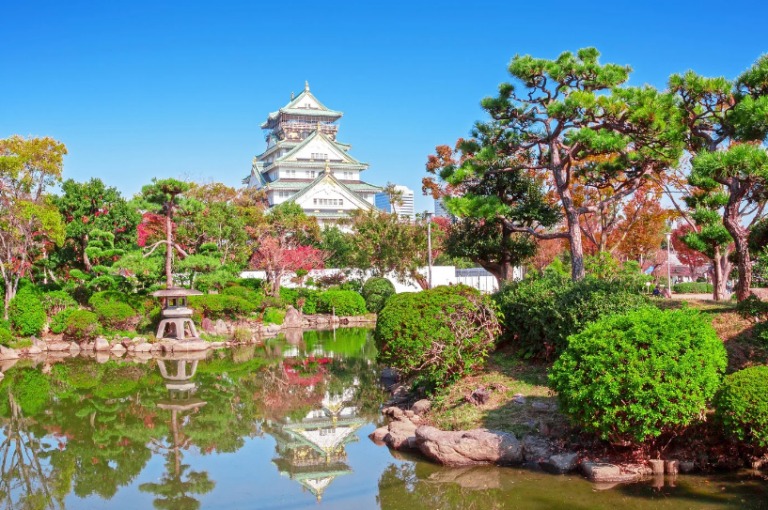
Osaka isn’t just a stop on the map; it’s the beating heart of Japan’s food culture. During the Edo period (1603–1867), the city earned the title “Tenka no Kuchimoto”, or “the nation’s kitchen,” because it served as the logistics hub for ingredients from all over Japan. Every grain of rice and every specialty ingredient from the northern provinces landed here first, shaping Osaka’s rich culinary tradition.
The contrast with Kyoto is striking. While Kyoto perfected the formal artistry of kaiseki cuisine, Osaka focused on lively, bold, street-level flavors. The sizzle of grills, the clacking of takoyaki picks, and the chatter of izakayas define the city’s dynamic food culture.
The Culinary Philosophy of Kuidaore
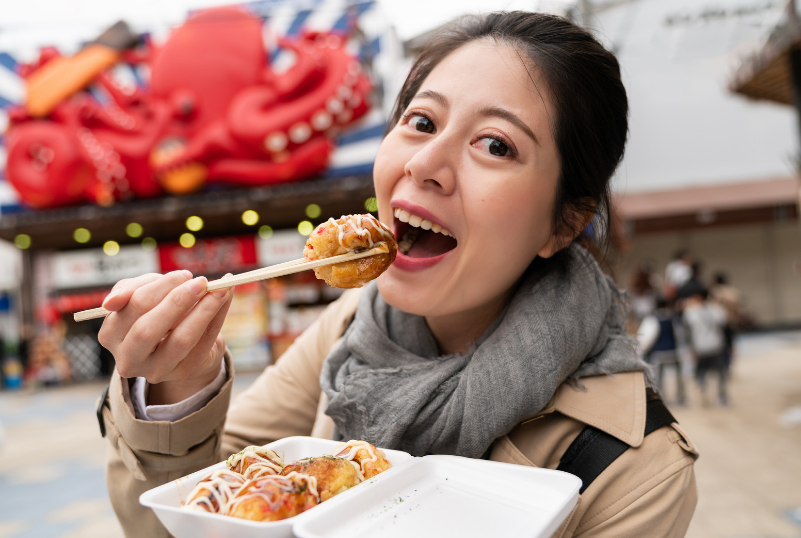
Kuidaore literally means “eat yourself into financial ruin,” and it’s practiced with pride. Locals invest in memorable meals rather than material goods, which has set Osaka’s standards impossibly high. Even small stalls must serve incredible food to survive. This philosophy ensures every bite in Osaka is full of energy, flavor, and authenticity.
The 2026 Food Scene
After the 2025 World Expo and a record number of visitors, Osaka’s food scene has evolved into a playground of tradition and innovation. Classic yatai stalls sit alongside high-tech, creative offerings — think fusion takoyaki or wagyu sliders next to century-old dashi shops. Craft sake and microbreweries are booming, and markets like Kuromon Ichiba balance modern demand with centuries-old techniques.
What makes Osaka food unique today:
- Tenka no Kuchimoto: Edo-period ingredient hub legacy.
- Street Style: Bold, approachable flavors dominate.
- Innovation: Craft beer and fusion street foods enrich the culinary landscape.
Beyond Dotonbori: Exploring Osaka’s Hidden Food Districts
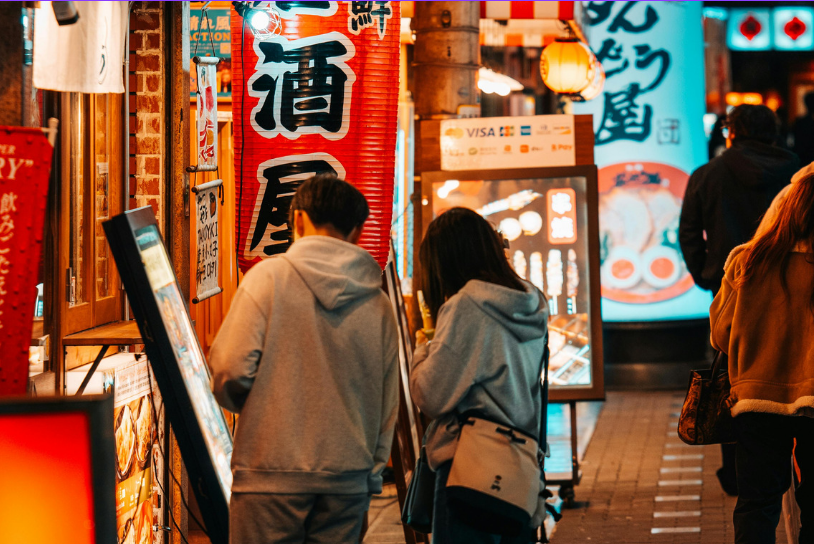
Dotonbori is the dazzling, neon face of the city, but the real culinary soul hides in the narrow alleys where locals have dined for generations. Start your morning at Kuromon Ichiba Market, a 190-year-old market with over 150 stalls — perfect for fresh sea urchin or giant grilled scallops before crowds arrive. From here, explore districts that show Osaka’s authentic character.
Shinsekai: The Retro Flavor of Old Japan

Step back into 1912 beneath the 103-meter Tsutenkaku Tower. The atmosphere is electric with retro charm and glowing lanterns. Shinsekai is famous for Kushikatsu, deep-fried skewers of meat, seafood, and vegetables. Remember the golden rule: never double-dip your skewer into the communal sauce tin. Signs in multiple languages remind diners of this essential etiquette. Shinsekai offers a masterclass in Osaka’s famous local dishes, paired with a slice of 20th-century history.
My Top Pick Restaurant in Shinsekai
Kushikatsu Daruma
This famous shop has served crispy skewers in Shinsekai for decades. You can choose from meat, shrimp, lotus root, and seasonal vegetables. The batter is light and crunchy, perfect with the sweet dipping sauce.
Tip: Just remember the rule posted on the wall: no double-dipping in the shared sauce tray.
Umeda: Modern Bites and Hidden Corners
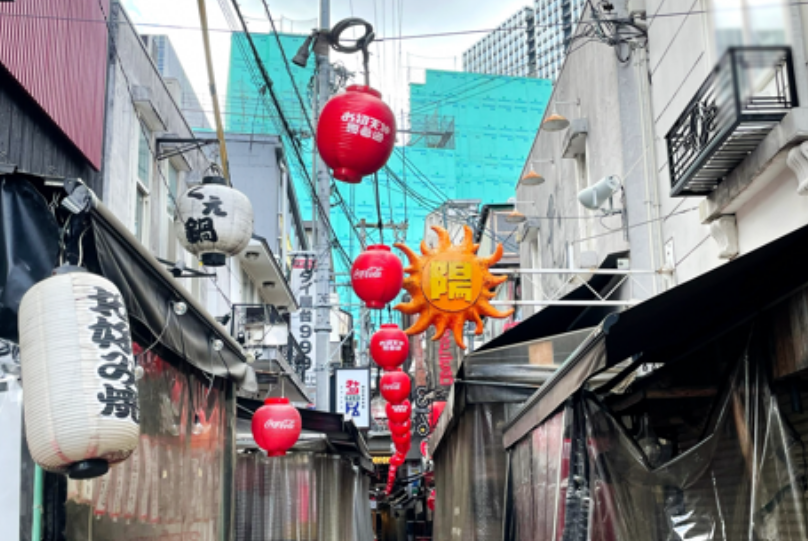
Umeda is a bustling hub where modern Osaka meets local traditions. Wander through side streets and discover small izakayas, standing bars, and bakeries loved by office workers. Explore Ohatsu Tenjin Ura-Sando, a maze-like alley with over 30 spots serving authentic Osaka flavors. This area is perfect for craft gyoza, fresh sushi, or a quick coffee while observing daily life in the city.
My Top Pick Restaurant in Umeda
Torikawa Keihan
If you enjoy chicken dishes, this cozy izakaya is one of my favorite places in Umeda. The specialty here is crispy grilled chicken skin skewers (torikawa) and a flavorful torimeshi rice bowl topped with tender chicken. The skewers are slowly grilled until the skin becomes rich and slightly crunchy, making them perfect with a cold beer or highball. The restaurant is just a short walk from Higashi-Umeda Station and offers a lively local atmosphere that feels very Osaka
Tip: Order the torikawa skewers first, then finish your meal with the torimeshi bowl. It’s the classic way locals enjoy it.
Kyobashi: A Neighborhood of Flavor
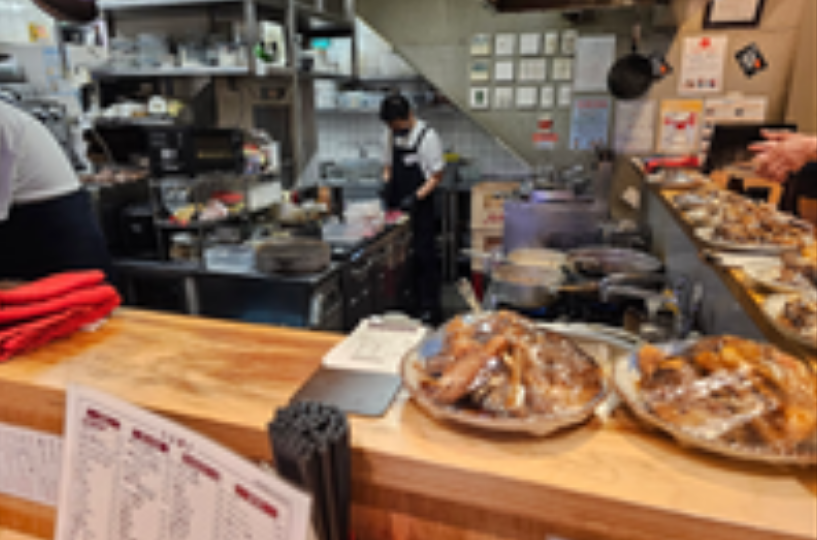
Kyobashi has a down-to-earth charm with casual eateries, small yakitori spots, and lively markets. The streets here are packed with locals enjoying lunch specials or late-night snacks. Stop by tiny bars where you can rub elbows with residents and experience Osaka’s energetic dining culture.
My Top Pick Restaurant in Kyobashi
Tachinomi Inaseya Kyobashi Branch
It’s a casual stand‑up bar just steps from Kyobashi Station with good prices and a fun crowd. You can enjoy cheerful izakaya bites like simmered stews, fresh cuts of tuna, grilled small plates, and cheap drinks that pair perfectly after exploring Kyobashi’s streets. Many visitors love its friendly atmosphere and variety of tasty snacks without breaking the bank.
Temma: Alleyways of Tradition
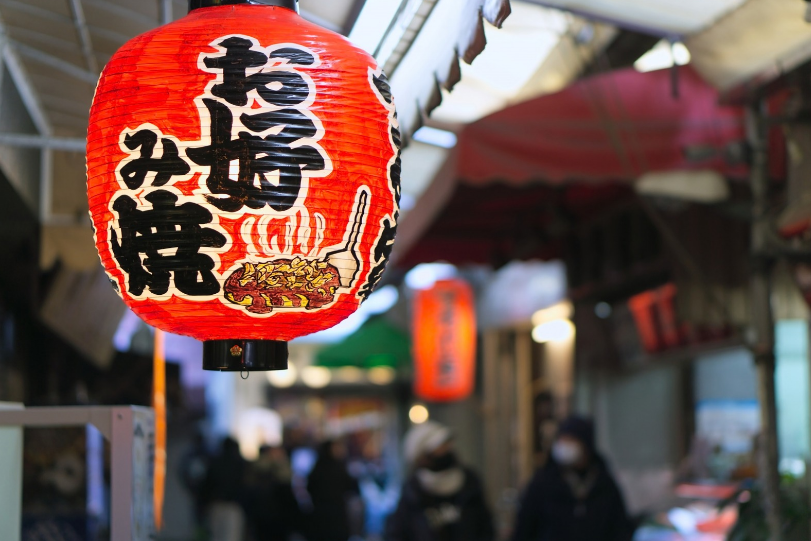
Temma is famous for its maze of narrow streets lined with family-run restaurants and traditional food stalls. It’s the place to try classic Osaka dishes like takoyaki, okonomiyaki, and kushikatsu in a relaxed, local atmosphere away from the tourist crowds.
My Top Pick Restaurant in Kyobashi
Sushi Kappo Tenmasushi Ekimaeten
It’s a lively sushi and kappo spot just a few minutes’ walk from the station. You can enjoy fresh sushi, sashimi, tempura, and a range of sake in a casual yet stylish space. The menu is easy on the wallet for Osaka sushi, and the counter seating makes it fun to watch chefs prepare each piece right in front of you
Why these districts stand out:
- Authentic Interaction: Standing bars break down social barriers.
- High Quality, Low Price: Office worker clientele keeps prices fair.
- Endless Variety: From 50-year-old unagi shops to modern craft beer bars.
The beauty of these districts is their resilience. Even as Osaka modernizes, these pockets maintain a grit and warmth you won’t find elsewhere. Don’t be afraid to push through a heavy noren curtain or climb a narrow staircase — the best meals often hide behind unmarked doors.
Must-Try Dishes on Your Osaka Food Adventure
Takoyaki
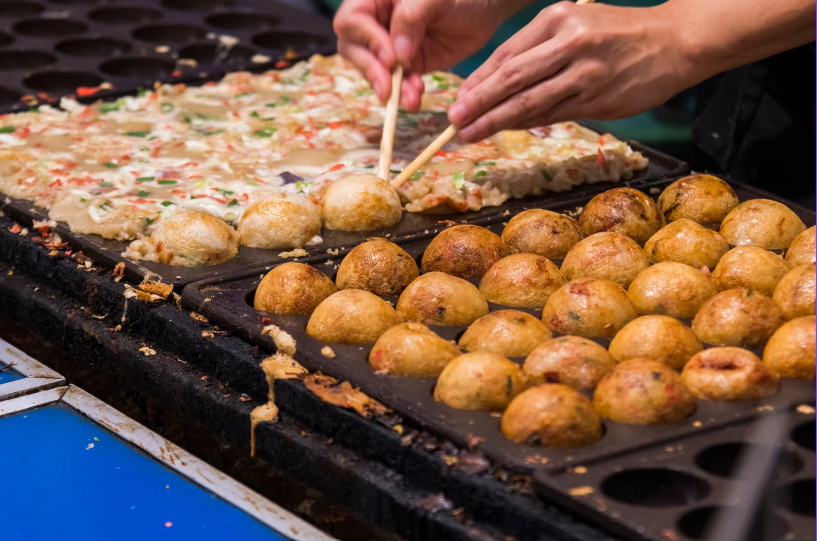
Crispy outside, gooey inside, filled with octopus. Try ponzu or sea salt versions to taste the fresh flavor.
Okonomiyaki
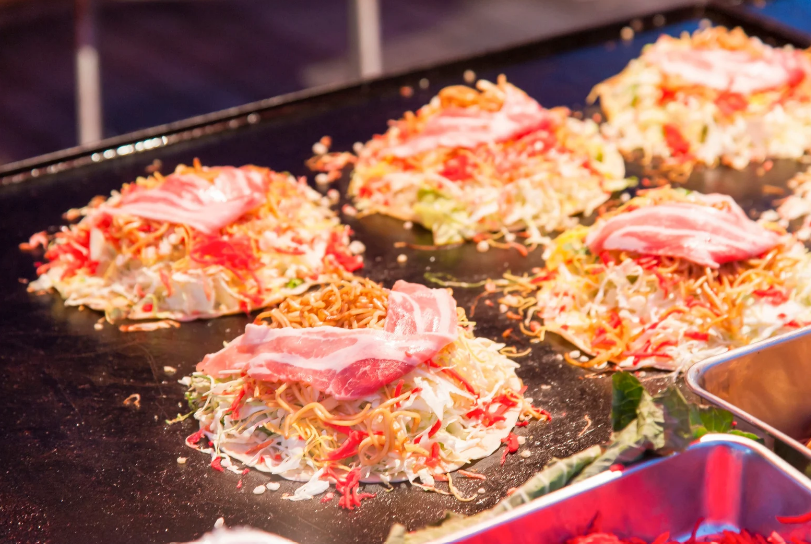
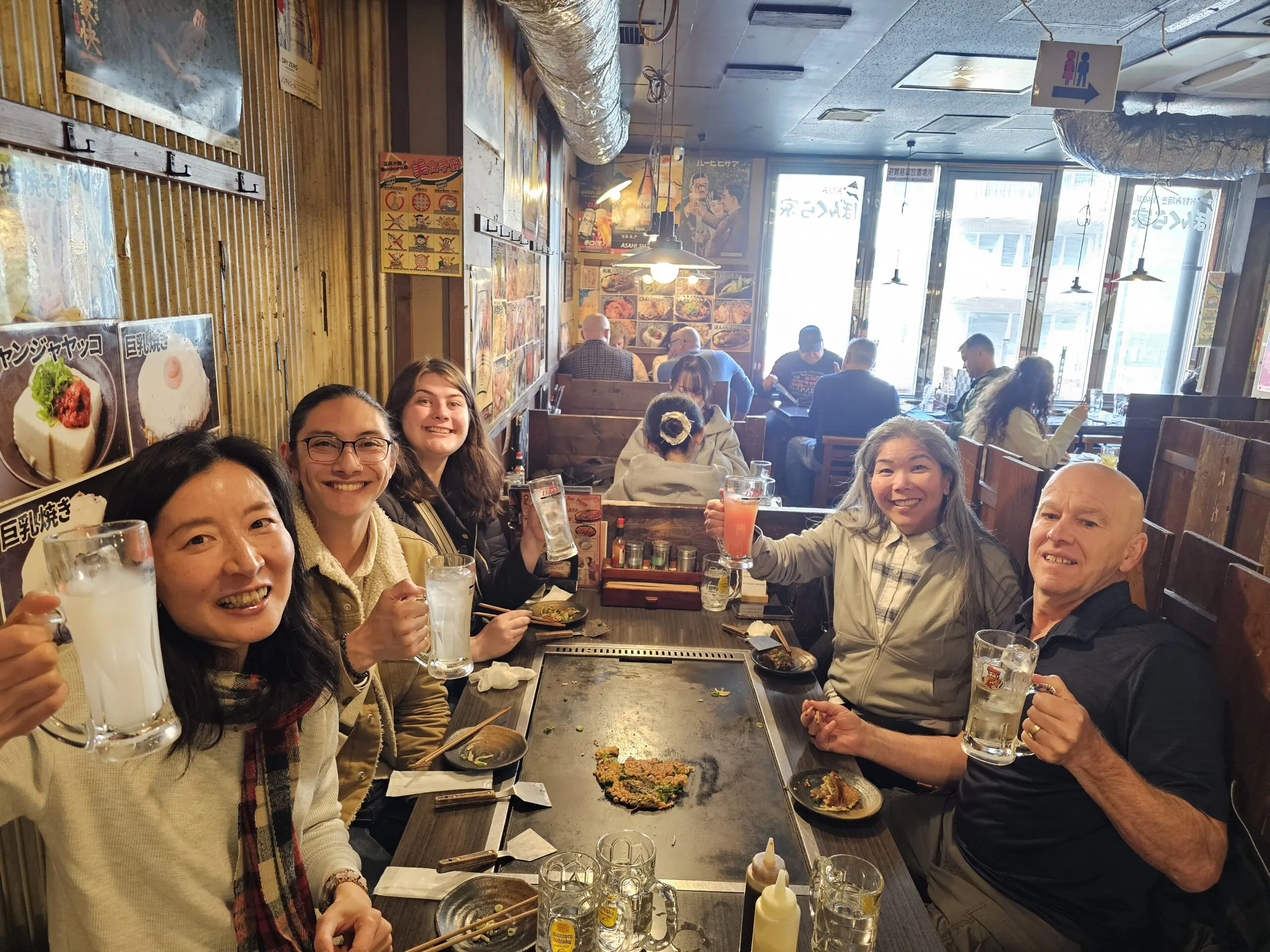
Cabbage pancake cooked on a teppan with ingredients mixed before grilling. Watch the bonito flakes “dance” as the final touch.
Kushikatsu
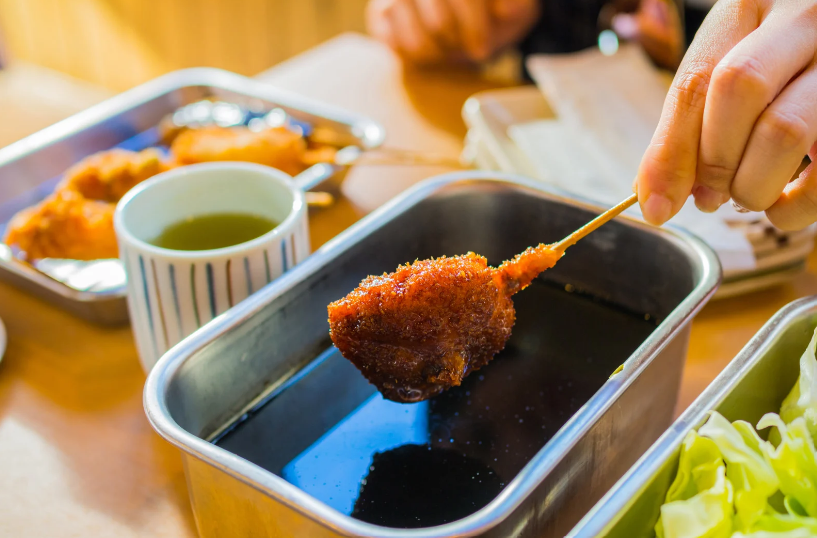
Deep-fried skewers of meat, seafood, and vegetables. Observe the no double-dip rule.
Tsuruhashi Yakiniku
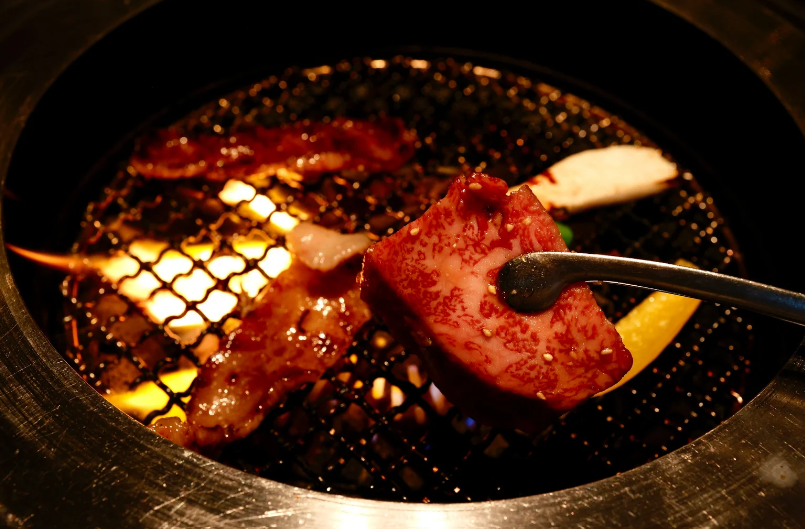
Tsuruhashi is the birthplace of Japanese-style BBQ with horumon (grilled offal) culture.
Fugu (Pufferfish)
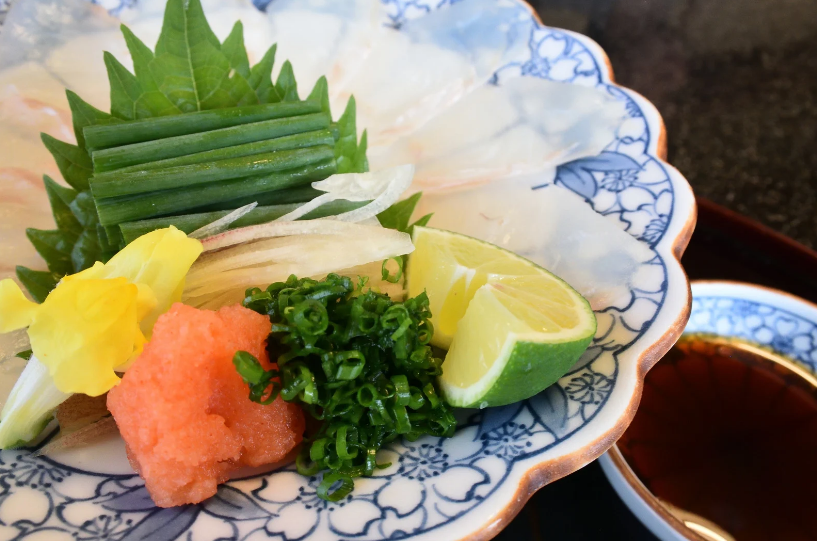
Safe when prepared by certified experts; enjoy as sashimi, karaage, or hot pot.
Other notable dishes include Doteyaki (sweet miso beef tendon), Horumon Yaki, Kitsune Udon, and Ikayaki (grilled squid).
Street Food Tips
- Carry cash; many stalls don’t accept cards.
- Follow locals’ lines for the best eats.
- Eat in place rather than walking.
- Sample small portions to taste more.
- Explore alleys for hidden gems.
Conclusion
To experience Osaka’s true culinary soul, skip the crowded neon streets of Dotonbori and explore local neighborhoods like Shinsekai, Temma, and Umeda. Taste must-try dishes such as Takoyaki, Okonomiyaki, and Kushikatsu, follow locals’ tips for finding hidden gems, and embrace the Kuidaore spirit that makes Osaka the “Kitchen of the World.” By venturing off the beaten path, you’ll enjoy authentic flavors, lively street food culture, and a food adventure that captures the heart of the city.
If you would like to explore the area with a local, you can also join our Private Food Tour in Osaka.
FAQ: Osaka Food Guide
What food is Osaka famous for?
Takoyaki, Okonomiyaki, and Kushikatsu.
Where should I eat street food?
Dotonbori, Kuromon Ichiba, Namba, Shinsekai, Fukushima, and Umeda.
Are there local foods tourists miss?
Doteyaki, Horumon Yaki, and Kitsune Udon.
Is eating while walking okay?
No — it’s polite to eat in place.